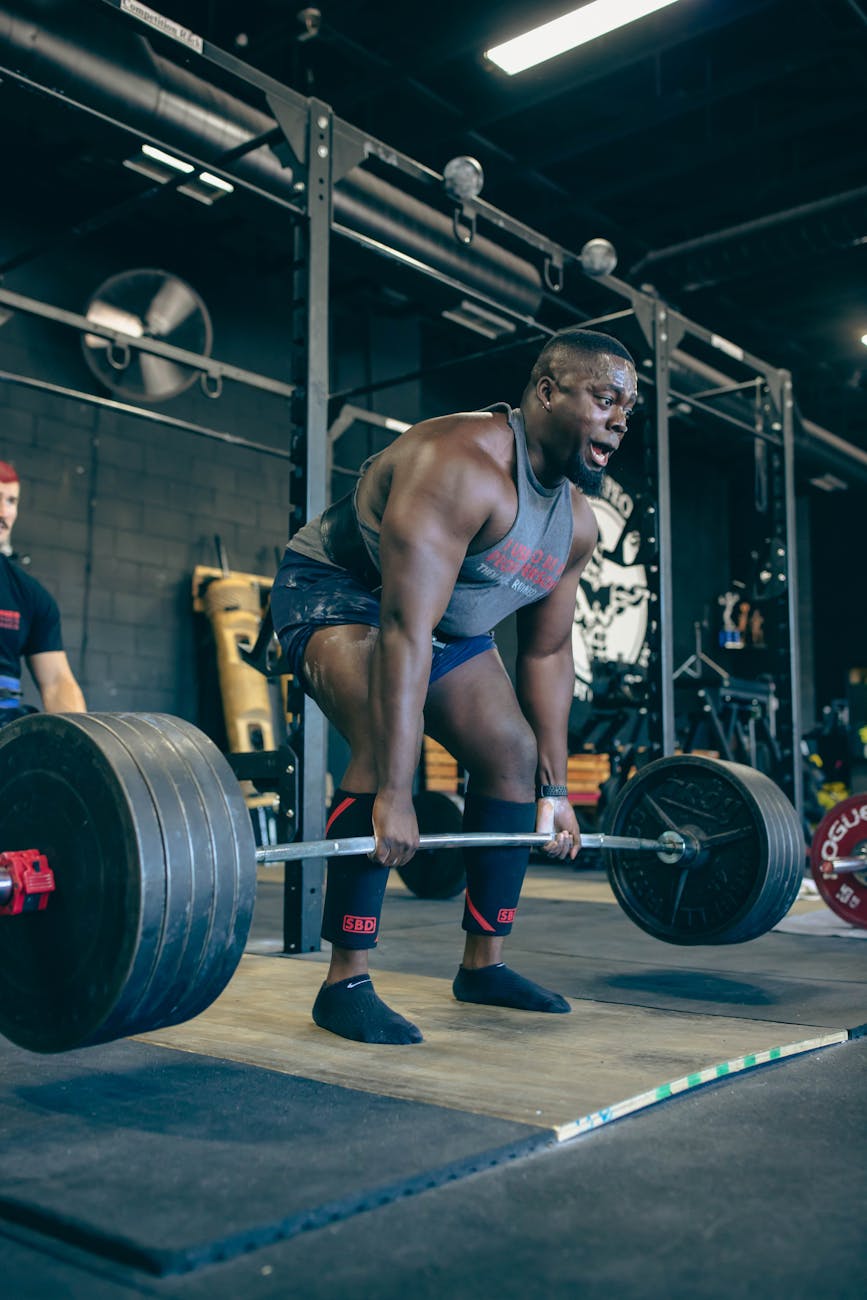
The deadlift. Just the name itself evokes images of raw power and athleticism. This foundational exercise, often considered a cornerstone of strength training, is a true test of physical strength and mental fortitude.
What is a Deadlift?
At its core, the deadlift is a compound exercise that involves lifting a loaded barbell from the ground to hip level, primarily using the muscles of the posterior chain (back, glutes, hamstrings). It’s a full-body movement that demands strength, coordination, and proper technique.
Deadlift Muscles Worked:
- Primary Movers:
- Posterior Chain:
- Hamstrings: Primarily responsible for hip extension.
- Glutes: Powerful muscles that extend the hips and provide stability.
- Erector Spinae: Muscles along the spine that support and stabilize the back.
- Trapezius: Upper back muscles involved in shoulder and scapular movement.
- Posterior Chain:
- Secondary Movers:
- Quadriceps: Assist in knee extension.
- Forearms: Crucial for gripping the barbell.
- Core: Engages to maintain stability throughout the lift.
Why You Should Deadlift:
- Builds Overall Strength: The deadlift is a compound exercise, meaning it works multiple muscle groups simultaneously. This makes it incredibly effective for building overall strength and power.
- Improves Posture: By strengthening the back and core muscles, deadlifts can improve posture and reduce the risk of back pain.
- Boosts Testosterone Levels: Deadlifting can stimulate the release of testosterone, a hormone crucial for muscle growth and strength development.
- Increases Bone Density: Lifting heavy weights can help increase bone density, reducing the risk of osteoporosis.
- Enhances Athletic Performance: The deadlift improves power, explosiveness, and overall athleticism, making it beneficial for athletes in various sports.
- Boosts Confidence: Successfully lifting heavy weights can be a significant confidence booster.
Mastering the Deadlift:
- Proper Form is Paramount: Focus on proper form from the start to prevent injury.
- Start Position: Stand with your feet hip-width apart, toes slightly pointed outward. Grip the barbell with an overhand grip, hands shoulder-width apart.
- Initiation: Engage your core, brace your back, and initiate the lift by driving your heels into the ground.
- Pull: Pull the weight up along your shins, keeping your back straight and avoiding rounding your shoulders.
- Lockout: Stand tall with the barbell at hip level, squeezing your glutes.
- Lower: Slowly and controlled, lower the barbell back to the ground.
- Start Light: Begin with lighter weights to master proper form before gradually increasing the load.
- Progressive Overload: Gradually increase the weight, repetitions, or sets over time to continue challenging your muscles.
- Listen to Your Body: Rest when needed and avoid pushing through pain.
- Consider Professional Guidance: Working with a qualified personal trainer can help you learn proper form and prevent injuries.
Variations of the Deadlift:
- Sumo Deadlift: A wider stance and narrower grip target the inner thighs and glutes more effectively.
- Romanian Deadlift: Starts from a standing position with a slight bend in the knees, emphasizing hamstring development.
- Trap Bar Deadlift: Uses a hexagonal bar, reducing stress on the lower back.
The deadlift is a challenging but rewarding exercise. By incorporating it into your training routine and prioritizing proper form, you can reap the numerous benefits of this foundational movement.



Leave a Reply