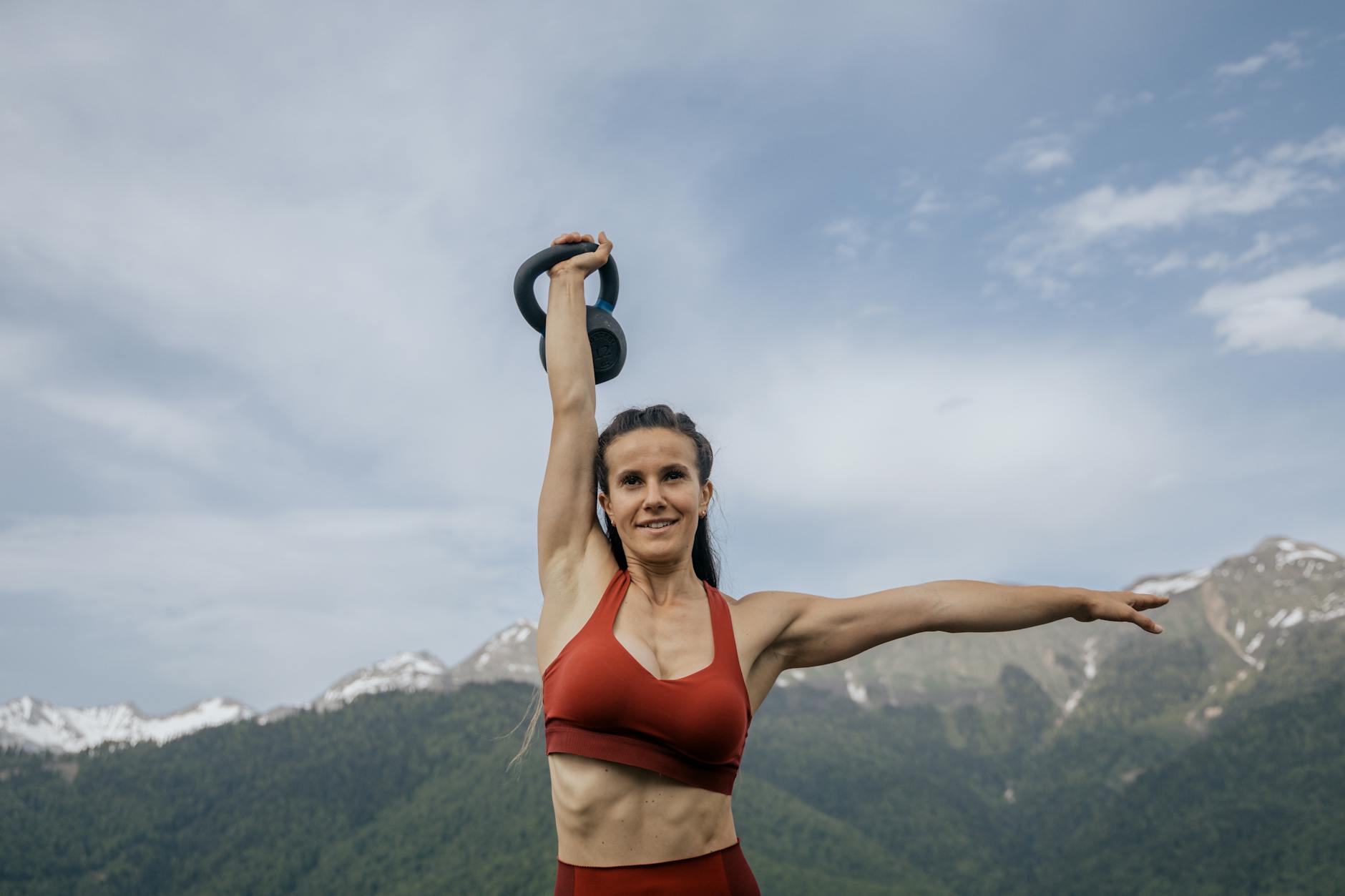
The kettlebell press is a dynamic exercise that challenges your upper body strength and stability. Unlike traditional barbell presses, kettlebell presses require greater coordination and control, making them a valuable addition to any strength training program. This blog post will explore three variations of the kettlebell press: the single-arm press, the double press, and the seesaw press.
- Single-Arm Kettlebell Press
- Execution:
- Starting Position: Hold a kettlebell in one hand in the rack position (resting on your shoulder with your elbow tucked in).
- Press: Press the kettlebell overhead, extending your arm fully.
- Lower: Slowly and controlled, lower the kettlebell back to the rack position.
- Repeat for the desired number of repetitions before switching sides.
- Muscles Worked:
- Primary: Shoulders (deltoids), triceps
- Secondary: Core, upper back, trapezius
- Tips:
- Maintain a strong and stable core throughout the movement.
- Avoid arching your back.
- Keep your elbow tucked in during the press.
- Use a controlled tempo to avoid momentum.
- Double Kettlebell Press
- Execution:
- Starting Position: Hold a kettlebell in the rack position of each arm.
- Press: Simultaneously press both kettlebells overhead.
- Lower: Slowly and controlled, lower both kettlebells back to the rack position.
- Muscles Worked:
- Primary: Shoulders (deltoids), triceps
- Secondary: Core, upper back, trapezius
- Tips:
- Maintain an even press with both arms.
- Avoid leaning back or forward.
- Focus on maintaining a stable base.
- Seesaw Kettlebell Press
- Execution:
- Starting Position: Hold a kettlebell in the rack position of each arm.
- Press: Press one kettlebell overhead.
- Switch: As you lower the kettlebell, simultaneously press the kettlebell in the opposite hand.
- Continue the seesaw motion, alternating presses between arms.
- Muscles Worked:
- Primary: Shoulders (deltoids), triceps
- Secondary: Core, upper back, trapezius
- Tips:
- Maintain a smooth and coordinated transition between arms.
- Avoid pausing at the top or bottom of the press.
- Focus on maintaining a stable base throughout the movement.
Incorporating Kettlebell Presses into Your Program
- Strength Training: Include kettlebell presses as part of your upper body strength training routine.
- Example: 3 sets of 6-8 repetitions.
- Circuit Training: Incorporate kettlebell presses into a circuit training routine for a challenging cardio and strength workout.
- Example: Perform 5-10 repetitions of a press variation, followed by a few other exercises without rest.
- Warm-up: Use light kettlebell presses as a dynamic warm-up to activate the shoulder muscles before your main workout.
Important Considerations:
- Proper Form: Prioritize proper form over weight.
- Choose Appropriate Weight: Start with a lighter weight and gradually increase the weight as you get stronger.
- Listen to Your Body: Rest when needed and avoid pushing yourself too hard, especially when starting.
Conclusion
Kettlebell presses are a versatile and effective exercise that can significantly enhance your upper body strength.



Leave a Reply