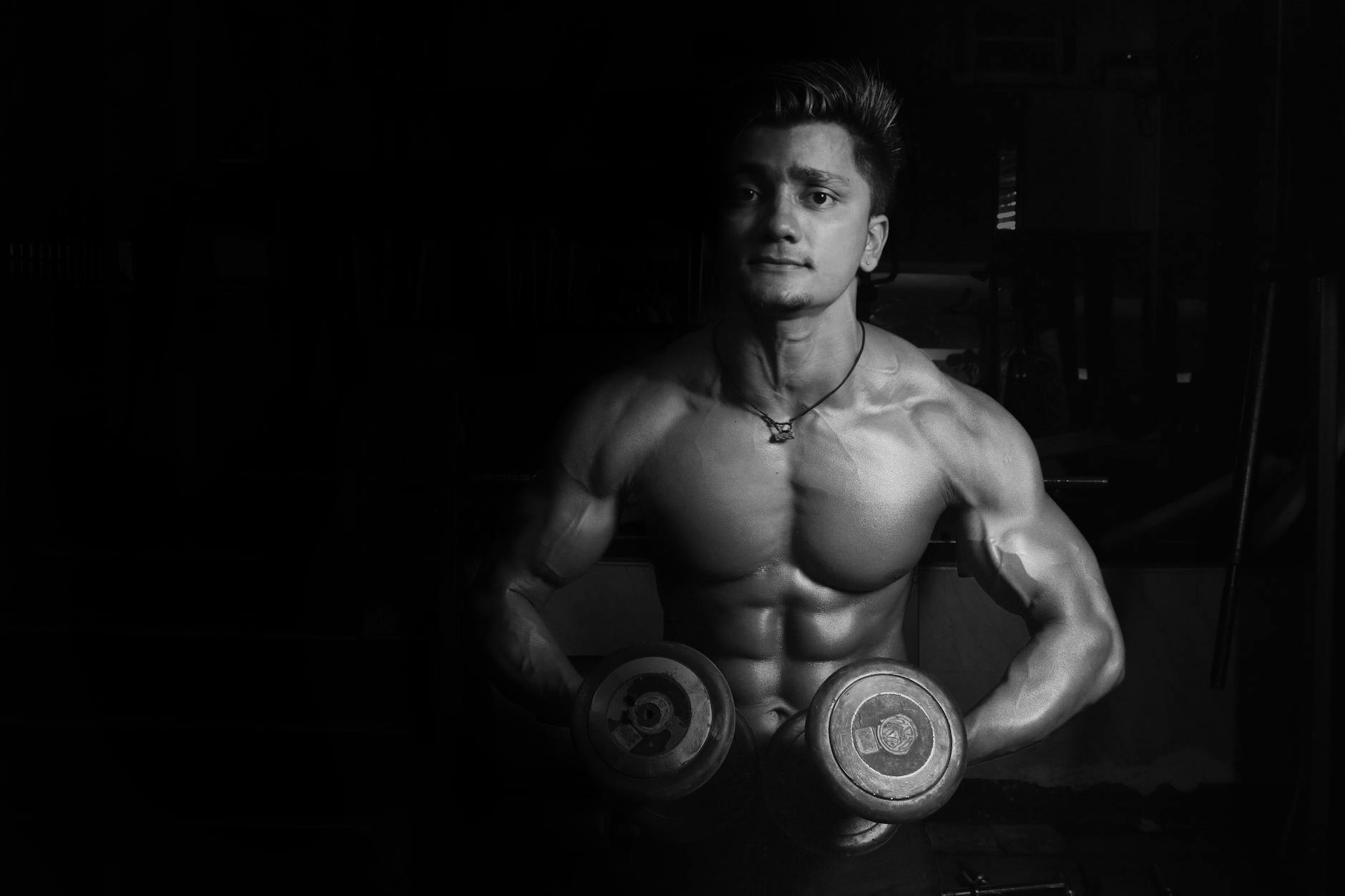
If fat loss were just about eating less, most people wouldn’t still be struggling with it.
The reality is that many adults—especially busy parents—are already eating very little, training inconsistently, sleeping poorly, and wondering why the scale won’t move. The typical advice they hear next is some version of:
“Just cut more calories.”
That advice ignores physiology.
When you start a fat-loss journey already under-fueled, cutting calories further doesn’t create momentum—it creates burnout, muscle loss, hormonal disruption, and a slower metabolism. In other words, it digs the hole deeper.
A better approach for most people is counterintuitive but far more effective:
- Build muscle first
- Increase metabolic capacity
- Restore hormones and recovery
- Raise calorie intake to a sustainable level
- Then cut calories strategically to lose body fat
This article explains why that works, how to apply it in real life, and how cycling between building and cutting can lead to better fat loss without wrecking your body.
The Biggest Fat-Loss Mistake: Starting With a Calorie Cut
Let’s start with the problem.
Most people who want to lose fat are already:
- Eating 1,200–1,600 calories
- Skipping meals
- Under-eating protein
- Over-stressing their bodies
- Training inconsistently or only doing cardio
When you cut calories from that starting point, your body doesn’t think:
“Great, now let’s burn fat.”
It thinks:
“Food is scarce. We need to conserve.”
The result is:
- Slower metabolism
- Increased hunger hormones
- Reduced thyroid output
- Lower training performance
- Muscle loss
- Plateaus and rebounds
You can lose weight this way—but you lose the wrong kind of weight.
Fat Loss vs. Weight Loss: A Critical Distinction
The scale doesn’t care what you lose.
Your body does.
When calories drop too low, the body adapts by:
- Reducing energy expenditure
- Breaking down muscle tissue
- Conserving fat stores (especially in stubborn areas)
Muscle is metabolically expensive. Fat is metabolically cheap.
So if the body senses threat, it preserves fat and sacrifices muscle.
That’s the opposite of what you want.
Muscle Is the Foundation of Fat Loss
If fat loss is the goal, muscle is the engine that gets you there.
Why muscle matters
Muscle:
- Increases basal metabolic rate (BMR)
- Improves insulin sensitivity
- Allows higher calorie intake without fat gain
- Protects hormones during dieting
- Improves body composition even at the same weight
- Makes fat loss easier to maintain
A body with more muscle can:
- Eat more food
- Train harder
- Recover better
- Lose fat without crashing
A body with less muscle has to:
- Eat less forever
- Fight hunger constantly
- Accept plateaus as normal
Metabolism Is Not Broken—It’s Adapted
Many people say:
“My metabolism is broken.”
What they really mean is:
“My metabolism adapted to years of under-eating and stress.”
Metabolism responds to:
- Muscle mass
- Calorie intake
- Training stimulus
- Stress
- Sleep
When calories stay low for too long, metabolism adapts downward. This includes:
- Lower resting energy expenditure
- Reduced non-exercise activity (you move less without realizing it)
- Hormonal shifts that increase fat storage
You don’t fix this by cutting more.
You fix it by building capacity.
Step One: Build Muscle and Restore Metabolic Capacity
Before fat loss comes fat readiness.
That means creating a body that can tolerate a calorie deficit without falling apart.
What this phase looks like
- Strength training 2–4x per week
- Eating enough calories to support training
- Prioritizing protein
- Sleeping more
- Managing stress
- Accepting that the scale may not move (or may even go up slightly)
This is where many people quit—because it doesn’t feel like “dieting.”
But physiologically, it’s the most brilliant move you can make.
Protein: The Cornerstone of the Entire Process
If there is one non-negotiable, it’s protein.
Protein:
- Preserves muscle
- Supports metabolic rate
- Improves satiety
- Supports hormone production
- Improves recovery
When calorie intake is low and protein intake is inadequate, muscle loss is guaranteed.
When protein is high—even during calorie deficits—muscle loss is dramatically reduced.
For fat loss, protein isn’t just about muscle.
It’s about metabolic protection.
Strength Training Signals the Body to Keep Muscle
Food alone doesn’t preserve muscle.
Mechanical tension does.
Strength training:
- Tells the body muscle is needed
- Increases insulin sensitivity
- Improves nutrient partitioning (calories go to muscle, not fat)
- Raises metabolic demand
Without resistance training, calorie deficits almost always lead to muscle loss.
This is why cardio-only fat loss plans fail long-term.
Eating More First: Why It’s Not “Getting Fat”
This is where fear creeps in.
People worry:
“If I eat more, I’ll gain fat.”
That can happen—but context matters.
When increased calories are paired with:
- Adequate protein
- Strength training
- Recovery
The body is far more likely to:
- Build or preserve muscle
- Improve training output
- Restore hormones
- Increase daily energy expenditure
Weight might go up slightly—but body composition often improves.
Clothes fit better.
Strength increases.
Energy improves.
Hunger normalizes.
That’s progress—even if the scale disagrees temporarily.
Hormones Improve When the Body Feels Safe
Chronic dieting sends a message of scarcity.
Scarcity leads to:
- Elevated cortisol
- Reduced thyroid output
- Disrupted reproductive hormones
- Increased fat storage efficiency
Eating enough—especially protein and total calories—signals safety.
When the body feels safe:
- Hormones normalize
- Metabolism increases
- Fat loss becomes possible later
You don’t force fat loss.
You earn it by building the right environment.
Step Two: Create Room to Cut Calories
Once you’ve:
- Built muscle
- Improved strength
- Increased calorie intake
- Stabilized energy and hunger
Now you have room to cut.
Instead of dropping from 1,400 to 1,100 calories, you might:
- Build up to 2,000 calories
- Then cut to 1,700
That’s still a deficit—but a livable one.
The body is far more cooperative when:
- The deficit is moderate
- Protein remains high
- Training stays strong
This is where fat loss actually sticks.
Cutting Calories Works Best When the Body Is Prepared
A calorie deficit is a stress.
Prepared bodies handle stress well.
Unprepared bodies break.
When you cut calories after building muscle:
- Less muscle is lost
- Metabolism stays higher
- Training performance is maintained
- Hunger is manageable
- Fat loss comes primarily from fat
This is the difference between:
- Temporary weight loss
- Sustainable body recomposition
Why Cycling Phases Work Better Than Permanent Dieting
The body adapts to everything—including fat loss.
That’s why cycling between phases works so well.
Build → Cut → Restore → Repeat
- Build / Restore phase: Eat more, train hard, build muscle, improve hormones
- Cut phase: Slight calorie reduction, maintain protein and training, lose fat
- Restore phase: Bring calories back up, stabilize weight, protect metabolism
This approach:
- Prevents metabolic slowdown
- Preserves muscle
- Reduces burnout
- Improves long-term adherence
Permanent dieting leads to permanent frustration.
Why This Approach Is Especially Important for Busy Parents
Busy parents already live under:
- Sleep deprivation
- Stress
- Time constraints
Adding extreme calorie restriction to that mix is a recipe for:
- Fatigue
- Injuries
- Hormonal disruption
- Weight regain
Building strength and eating enough:
- Improves resilience
- Increases energy
- Makes fat loss easier—not harder
Strong parents move more easily, think more clearly, and handle life better.
Common Objections (and Real Answers)
“I just want to lose weight quickly.”
Quick loss usually comes from muscle and water. It rarely lasts.
“I don’t want to lift heavy.”
You don’t need to lift heavy—but you need resistance.
“I’m afraid to eat more.”
Fear is understandable. Strategy beats fear every time.
“I’ve tried eating more before and gained weight.”
Without strength training and protein, that’s likely—context matters.
The Long-Term Payoff
When you build muscle first:
- Fat loss becomes easier
- Maintenance becomes possible
- Confidence increases
- Health improves
- Food becomes less stressful
You stop fighting your body—and start working with it.
The Bottom Line
If you want to lose body fat and keep it off, stop starting with deprivation.
Build muscle.
Eat protein.
Train for strength.
Restore your metabolism.
Then cut calories on your terms.
Fat loss is not about how little you can eat.
It’s about how much your body can handle—and still thrive.
Leave a Reply