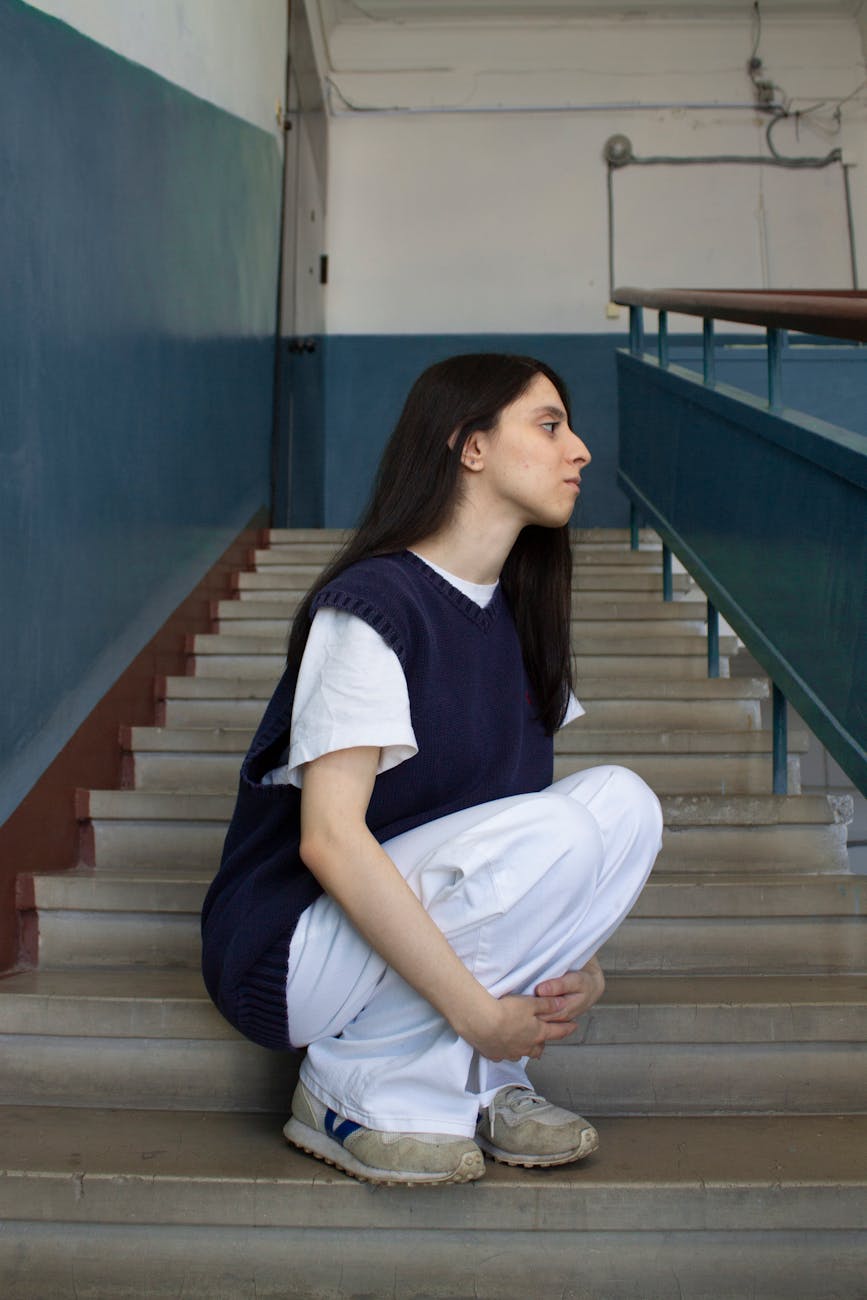
There was a time when sitting in a deep squat wasn’t an exercise.
It was just… sitting.
Across much of human history — and still today in many cultures — people rest, talk, cook, work, and wait in a deep squat position. Children drop into it naturally. Toddlers can sit there for minutes without effort.
Yet most adults in modern societies:
- can’t get into a deep squat
- can’t stay there comfortably
- feel pain, tightness, or instability when they try
- and often assume that’s “just how aging works.”
It isn’t.
The resting squat is one of the most fundamental human positions — and losing it is a signal, not an inevitability.
This article will cover:
- What a resting squat is
- How to perform it correctly
- Why this position matters for health and longevity
- What does losing it say about your mobility
- and how to regain it safely if you can’t squat comfortably today
What Is a Resting Squat?
A resting squat (sometimes called an “Asian squat” or “deep squat”) is a position where:
- feet are flat on the ground
- hips drop below knee level
- The torso remains upright or slightly forward
- heels stay down
- spine stays long and relaxed
- and the position can be held comfortably
This is not a strength test.
It’s not a loaded squat.
It’s not a workout.
It’s a resting position — one your body should be able to access without strain.
In an actual resting squat:
- muscles are active but relaxed
- Breathing is easy
- balance feels natural
- There’s no pinching or sharp pain
Why Humans Are Designed to Squat This Way
Humans evolved without chairs.
For thousands of years, people:
- squatted to rest
- squatted to work
- squatted to eat
- squatted to use the bathroom
- squatted while waiting
This position:
- keeps hips mobile
- maintains ankle range of motion
- preserves spinal flexibility
- encourages frequent movement
The problem isn’t the squat.
The problem is that we stopped using it.
Why Losing the Resting Squat Matters
When you lose the ability to sit comfortably in a deep squat, it’s rarely just about the squat itself.
It’s usually a sign of:
- limited ankle mobility
- restricted hip motion
- poor balance
- Reduced joint tolerance
- nervous system guarding
- or all of the above
And those limitations show up elsewhere.
Benefits of Being Able to Sit in a Resting Squat
1. Hip Health and Longevity
The resting squat moves the hips through deep flexion — a range many adults never access.
This:
- nourishes joint cartilage
- maintains capsule health
- improves tolerance to deep positions
Avoiding deep hip flexion doesn’t protect your hips — it makes them weaker and less adaptable.
2. Ankle Mobility
A deep squat requires ankle dorsiflexion — the ability for the knee to travel forward over the toes.
Loss of ankle mobility is associated with:
- knee pain
- Achilles issues
- plantar fasciitis
- poor squat mechanics
- reduced balance
The resting squat gently exposes the ankles to the range of motion for which they were designed.
3. Knee Comfort (Yes, Really)
Many people fear squatting because of their knees.
But controlled deep squatting:
- strengthens the muscles around the knee
- improves joint tolerance
- distributes load across tissues
Avoidance often leads to less knee resilience, not more.
4. Spinal Health
A relaxed deep squat allows:
- natural spinal flexion and extension
- decompression
- improved breathing mechanics
It’s a position where the spine can move instead of staying locked all day.
5. Digestive and Pelvic Health
Historically, squatting was the primary position for toileting.
This position:
- aligns the pelvis more naturally
- reduces strain
- supports pelvic floor function
While modern toilets changed habits, the body’s anatomy hasn’t changed.
6. Balance and Fall Prevention
Being able to get:
- down to the floor
- and back up again
It is a massive marker of functional independence as we age.
The resting squat improves:
- balance
- coordination
- confidence near the floor
Why Most Adults Can’t Rest in a Squat Anymore
This isn’t a failure of effort — it’s a consequence of environment.
1. Chairs Everywhere
We sit:
- at work
- in cars
- at meals
- on the couch
Our hips and ankles rarely move through full ranges.
2. Shoes That Limit Ankle Motion
Modern footwear often:
- elevates the heel
- stiffens the sole
- restricts natural foot movement
This slowly removes the ankle range of motion.
3. Fear of Deep Positions
Many people are told:
- “Don’t let your knees go forward.”
- “Deep squats are bad.”
- “that position is dangerous.”
Avoidance leads to loss of capacity.
4. Loss of Floor Time
Adults rarely:
- sit on the floor
- play down low
- transition between positions
We lose the skill simply because we don’t practice it.
How to Perform a Resting Squat
A simple checklist:
- Stand with feet about shoulder-width apart
- Turn toes slightly out (as needed)
- Push hips back and down
- Let knees travel forward naturally
- Keep heels on the floor
- Let the chest stay tall
- Relax into the position
- Breathe slowly
There is no “perfect” squat shape.
Bodies differ. Limb lengths differ. Hip anatomy differs.
Comfort and control matter more than appearance.
What If You Can’t Get Into a Resting Squat?
That’s extremely common — and completely fixable for most people.
The goal is not to force yourself down.
The goal is to build tolerance and mobility gradually.
Step 1: Use Support
Use:
- a door frame
- a pole
- a countertop
- a squat wedge or slight heel elevation
This allows you to:
- sit deeper
- reduce strain
- stay balanced
Support lets your joints experience the position safely.
Step 2: Elevate the Heels (Temporarily)
If ankles are limiting you:
- Place heels on a small plate
- wedge
- folded towel
This reduces ankle demand while you work on mobility.
Gradually reduce the elevation over time.
Key Areas to Improve for the Resting Squat
1. Ankle Mobility
Helpful drills:
- ankle rocks
- calf stretches
- knee-to-wall drills
- slow-loaded ankle dorsiflexion
Ankles are often the biggest limiter.
2. Hip Mobility
Helpful movements:
- deep squat holds with support
- hip flexor stretches
- 90/90 hip rotations
- seated hip circles
Hips need both mobility and strength.
3. Adductor (Inner Thigh) Flexibility
The deep squat loads the inner thighs.
Helpful exercises:
- side lunges
- Cossack squats
- supported lateral squats
These improve comfort at depth.
4. Core and Trunk Control
A weak or uncoordinated core can make the squat feel unstable.
Helpful movements:
- goblet squats
- front-loaded squats
- slow tempo squats
Loading the front often improves squat comfort.
Progressions to Build Toward a Resting Squat
Progression 1: Box Squats
Sit on a box or bench slightly above parallel.
Progression 2: Assisted Deep Squat Holds
Hold onto support and sink deeper.
Progression 3: Goblet Squats
Holding weight in front helps counterbalance.
Progression 4: Partial Resting Squat
Stay just above your limit and breathe.
Progression 5: Full Resting Squat
Heels down, relaxed breathing, no support.
How Often Should You Practice the Resting Squat?
The resting squat benefits from frequency rather than intensity.
You can:
- practice daily
- hold it for 30–60 seconds at a time
- Use it as a break from sitting
Think of it as:
- movement hygiene
- not a workout
How to Use the Resting Squat in Daily Life
Simple ideas:
- squat while playing with kids
- squat during TV commercials
- squat while waiting for coffee
- Squat during phone breaks
- Squat as a mobility reset
It doesn’t need to be formal.
Is the Resting Squat Safe as We Age?
Yes — and it may become more critical.
The ability to:
- get down
- stay down
- and stand back up
It is strongly associated with independence and quality of life.
The key is:
- gradual exposure
- smart regressions
- patience
You don’t lose the resting squat because of age.
You lose it because you stop using it.
Common Mistakes to Avoid
- Forcing depth aggressively
- Ignoring ankle limitations
- Holding breath
- Chasing pain instead of comfort
- Treating it like a strength test
The resting squat should feel restful, not punishing.
The Bigger Picture
The resting squat isn’t about flexibility for its own sake.
It’s about:
- reclaiming movement options
- keeping joints adaptable
- staying comfortable near the floor
- maintaining independence
- and reminding your body what it was designed to do
It’s a quiet marker of movement health — and one worth protecting.
Final Takeaway
If you can’t sit comfortably in a deep squat today, that’s not a failure.
It’s information.
And with consistent, gentle practice, it’s a skill most people can regain.
You don’t need extreme mobility routines.
You don’t need endless stretching.
You need to:
- spend time in the position
- build tolerance gradually
- and treat movement as something you practice — not something you avoid
The resting squat isn’t advanced.
It’s fundamental.
Leave a Reply