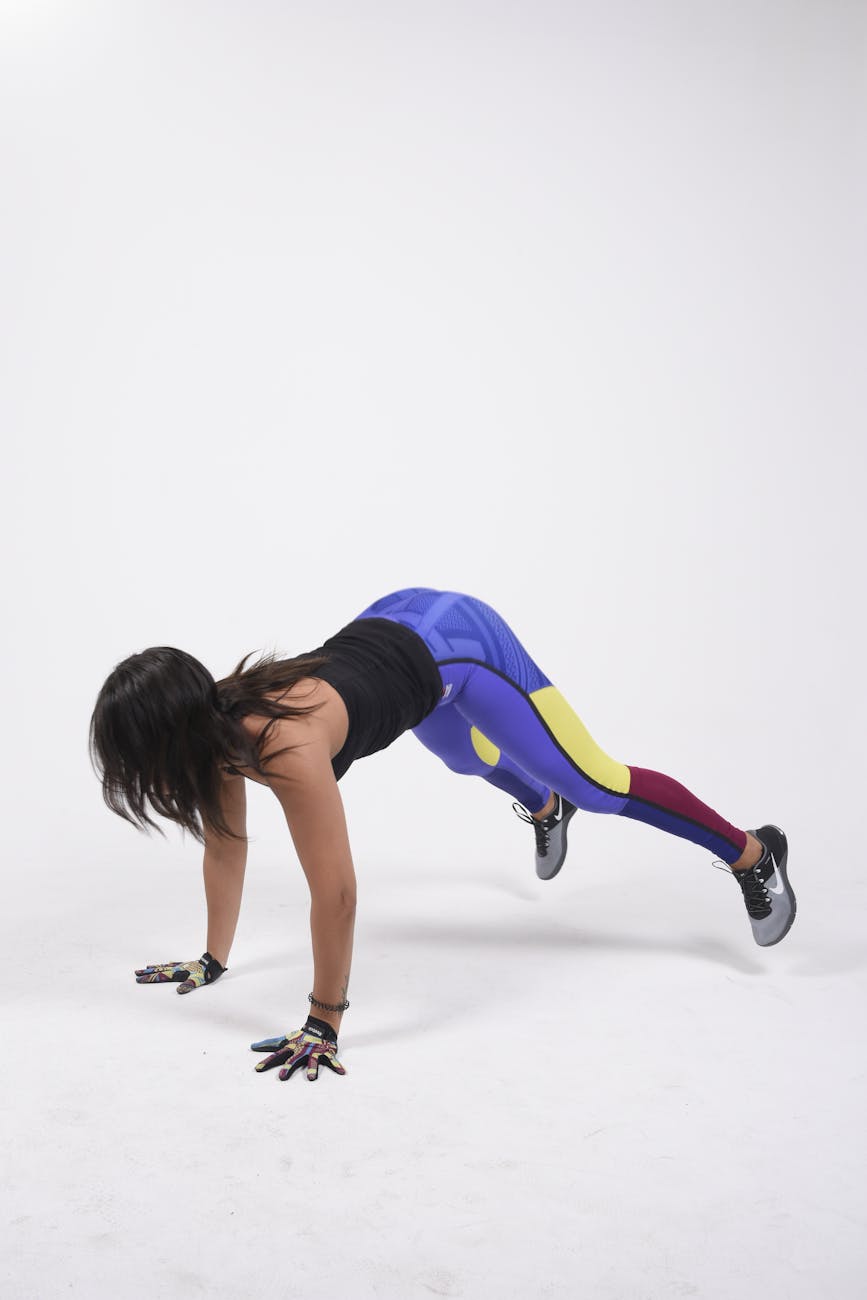
Few exercises are as polarizing as the burpee.
Some people love them.
Most people hate them.
Almost everyone agrees they’re brutally effective.
But here’s the truth: burpees are one of the most misunderstood movements in fitness. When programmed intelligently — and progressed correctly — they can become a powerful tool for conditioning, fat loss, work capacity, and mental resilience. And when you’re ready to level up, burpees naturally evolve into devil presses and man makers, two loaded movements that blend strength and conditioning into one demanding package.
This article will break down:
- What burpees actually train
- How many should you do (and how often)
- How to structure them without wrecking recovery
- How to regress burpees if they’re too hard
- How to progress them into more challenging variations
- And why devil presses and man makers are a logical next step as you get stronger and fitter
What Are Burpees, Really?
At their core, burpees are a full-body movement chain. A proper burpee includes:
- a squat
- a plank or push-up
- a hip hinge or jump
- and a return to standing
That combination means burpees train:
- legs
- core
- chest
- shoulders
- lungs
- coordination
- and mental toughness
Unlike isolated exercises, burpees force your body to transition between positions under fatigue, which is much closer to real-world movement than most gym machines.
The Real Benefits of Burpees
1. Full-Body Conditioning
Burpees engage nearly every major muscle group, which makes them highly efficient. You don’t need much equipment, space, or time to achieve a meaningful training effect.
2. Cardiovascular Fitness
Burpees spike your heart rate quickly. Even small sets can push you into high heart-rate zones, making them effective for conditioning without long cardio sessions.
3. Work Capacity
Work capacity is your ability to do more work in less time — and recover from it. Burpees build this better than almost any bodyweight movement.
4. Fat Loss Support
Burpees burn calories, but more importantly, they:
- raise post-exercise energy expenditure
- improve insulin sensitivity
- increase tolerance to effort
They aren’t magic for fat loss, but they are a strong supporting tool when paired with proper nutrition and resistance training.
5. Mental Resilience
Burpees demand effort when you’re already tired. Learning to keep moving under discomfort translates well to:
- training consistency
- life stress
- and challenging situations outside the gym
How Many Burpees Should You Do?
This is where people often go wrong.
More is not always better.
Beginner Range
- 5–10 burpees at a time
- 20–40 total per session
Intermediate Range
- 10–15 per set
- 40–75 total per session
Advanced Range
- 15–25 per set
- 75–150 total per session (spread out, not all at once)
For most people, quality and breathing control matter more than chasing huge numbers.
If form collapses, you’re doing too many.
How to Structure Burpees
Burpees work best when they’re placed strategically, not randomly thrown into every workout.
Option 1: Burpees in the Warm-Up
Use burpees as a way to:
- raise heart rate
- mobilize joints
- prepare the body for work
Example:
- 3 rounds
- 5 burpees
- 10 air squats
- 20 jumping jacks
This is simple, effective, and not exhausting.
Option 2: Burpees During the Workout
Burpees pair well with strength work.
Example:
- Squats → rest → 8 burpees
- Press → rest → 8 burpees
- Deadlift → rest → 8 burpees
They add conditioning without turning the session into chaos.
Option 3: Burpees as a Finisher
This is where burpees shine.
Examples:
- 5 burpees every minute for 10 minutes
- 50 burpees for time (broken into manageable chunks)
- Ladder: 2–4–6–8–10 burpees
Finishers should challenge you — not annihilate you.
How to Regress Burpees (If Full Burpees Are Too Hard)
Burpees don’t have to be all-or-nothing.
Regression Options
- Step-Back Burpees (no jump)
- Incline Burpees (hands on a bench or box)
- Plank to Stand (no push-up, no jump)
- Squat + Reach Only
The goal is movement and breathing — not suffering.
If someone avoids burpees because they’re “too hard,” regression is the answer, not avoidance.
How to Progress Burpees
Once basic burpees feel manageable, progression should be gradual.
Progression Options
- Add a push-up
- Add a jump
- Increase tempo
- Increase reps per set
- Reduce rest time
- Add external load
The final step of progression is adding weight, which brings us to devil presses and man makers.
What Is a Devil Press?
A devil press is essentially:
- a burpee
- combined with
- a dumbbell snatch or overhead press
You:
- Place hands on dumbbells
- Drop into a burpee
- Stand up
- Drive the dumbbells overhead
It turns a bodyweight movement into a loaded conditioning exercise.
Benefits of Devil Presses
- Massive full-body demand
- Strength + conditioning in one movement
- Grip, shoulders, legs, core, lungs, all working
- High calorie cost without needing machines
The devil presses for reward, smooth movement, not rushing.
What Are Man Makers?
Artificial objects are similar but slightly more complex.
A typical man maker includes:
- push-up on dumbbells
- renegade row (one or both sides)
- squat
- overhead press
Compared to devil presses:
- man makers are slower
- more strength-focused
- more demanding on the upper body
They require:
- core stability
- shoulder control
- anti-rotation strength
Devil Press vs Man Maker: Which Is Better?
Neither is “better.” They serve different purposes.
Devil Press
- More conditioning-focused
- Faster pace
- Great for metabolic finishers
Man Maker
- More strength-focused
- Slower tempo
- Better for controlled circuits
Many people progress:
Burpees → Devil Presses → Man Makers
How to Program Devil Presses and Man Makers
Frequency
- 1–2 times per week is plenty
- They are demanding — recovery matters
Rep Ranges
- Devil Presses: 5–10 reps per set
- Man Makers: 3–6 reps per set
Structure Ideas
- EMOM (every minute on the minute)
- Circuits with rest
- Finishers after strength work
Avoid doing them heavily and sloppily.
Who Should Use These Movements?
Burpees:
- Almost everyone (with regressions)
Devil Presses and Man Makers:
- intermediate to advanced trainees
- people with decent shoulder and core strength
- Those looking to combine strength and conditioning efficiently
If you’re new to training, start with clean burpees first.
Common Mistakes to Avoid
- Turning every workout into a burpee workout
- Chasing exhaustion instead of progress
- Letting form collapse
- Ignoring recovery
- Using weight too soon
Burpees are effective because they’re simple — not because they’re extreme.
The Bigger Picture
Burpees, devil presses, and man makers are tools — not punishments.
They work best when:
- used intentionally
- progressed logically
- paired with proper strength training
- supported by adequate nutrition and recovery
You don’t need to love them.
You don’t need to do them every day.
But when used wisely, they can build:
- conditioning
- confidence
- resilience
- and a body that performs well beyond the gym
Final Takeaway
If you can:
- move well
- breathe under effort
- transition smoothly between positions
You’re building fitness that actually carries over to life.
Burpees are just the beginning.
Devil presses and man makers are the next rung on the ladder.
Climb when you’re ready.
Leave a Reply