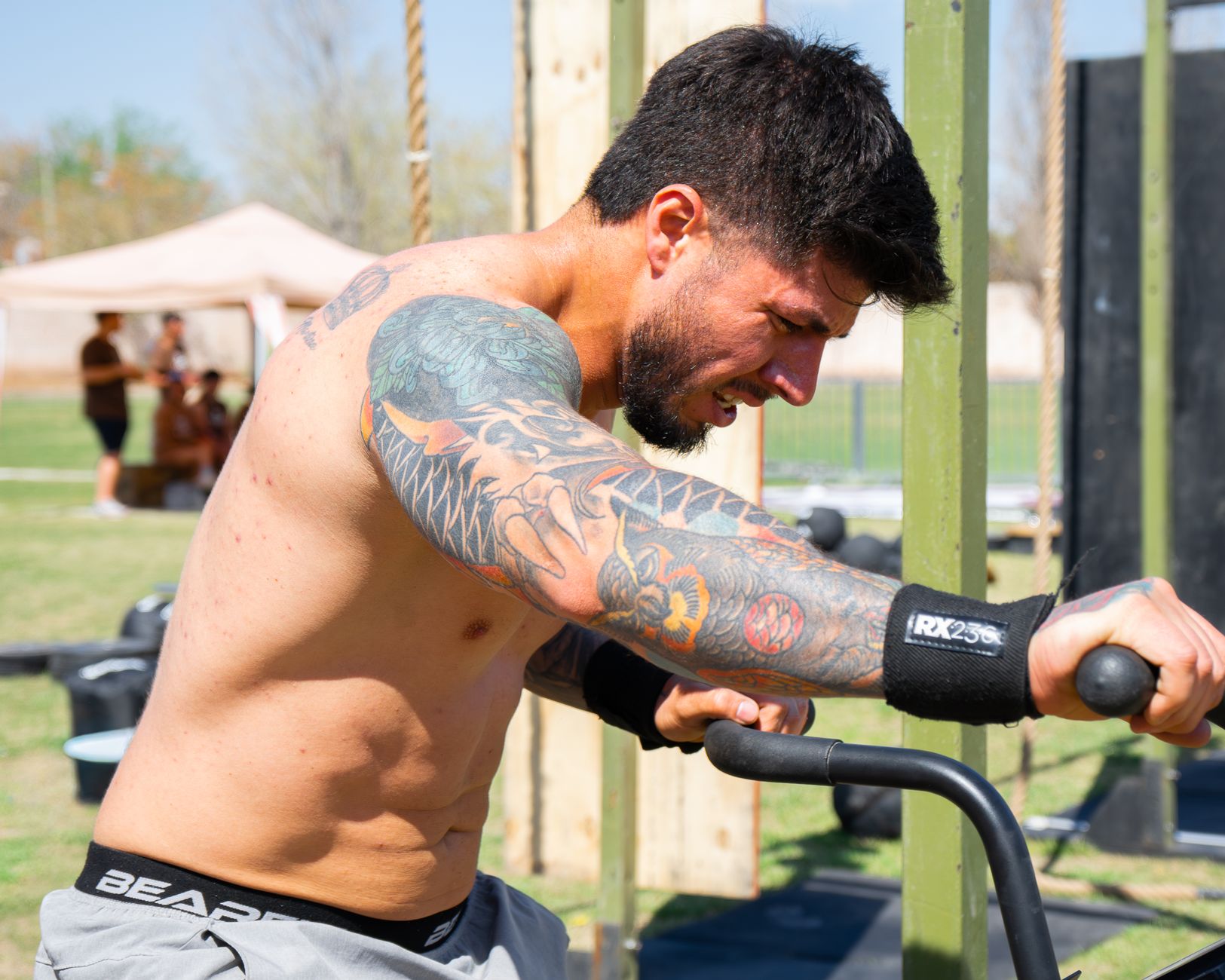
In the fitness world, there is often an unspoken belief that more is better.
More workouts.
More sets.
More intensity.
More sweat.
More exhaustion.
Many people assume that if they’re not completely drained at the end of a workout, they didn’t work hard enough. They wear fatigue like a badge of honor and believe that pushing themselves to their limit every day is the key to getting fitter.
Unfortunately, this mindset often leads to the opposite result.
Instead of becoming stronger and more capable, people become chronically tired, sore, unmotivated, and eventually burned out.
The reality is that your ability to do more work—what we often call work capacity—is an important component of fitness. But it needs to be developed gradually and intelligently.
The goal isn’t to see how much punishment you can tolerate.
The goal is to build a body that can handle more activity, recover well, and remain healthy and resilient for years to come.
What Is Work Capacity?
Work capacity refers to your ability to perform and recover from physical work.
In simple terms, it’s how much exercise your body can handle before your performance starts to decline.
Someone with good work capacity can:
- Recover quickly between sets.
- Handle higher training volumes.
- Perform physical tasks without excessive fatigue.
- Recover well between workouts.
- Maintain energy throughout the day.
Work capacity isn’t the same thing as cardiovascular fitness, although the two are related.
It’s also different from maximal strength.
A person may be incredibly strong but struggle with higher-volume training.
Another person may not be exceptionally strong but can perform a large amount of work and recover quickly.
Both qualities matter, but they are not identical.
Why Work Capacity Matters
Improving work capacity can make nearly every aspect of training and daily life easier.
Better work capacity may help you:
- Recover faster during workouts.
- Increase training volume when appropriate.
- Improve overall fitness.
- Handle physically demanding activities.
- Maintain energy throughout the day.
- Tolerate stress more effectively.
- Stay active as you age.
It also has practical applications outside the gym.
Carrying groceries.
Playing with your children.
Doing yard work.
Taking long hikes.
Traveling.
These activities become easier when your body can tolerate more work without excessive fatigue.
The Problem with Doing Too Much, Too Soon
One of the biggest mistakes people make is trying to dramatically increase their workload overnight.
They go from exercising twice per week to training six days per week.
They add high-intensity intervals, long runs, and extra strength sessions all at once.
For a few weeks, they may feel motivated.
Then reality catches up.
Fatigue accumulates.
Motivation drops.
Aches and pains begin appearing.
Sleep suffers.
Performance declines.
Eventually, many people quit entirely.
Fitness should challenge your body, but it shouldn’t constantly overwhelm it.
Adaptation Requires Recovery
This is one of the most important concepts in fitness.
You don’t get fitter during the workout.
You get fitter by recovering from the workout.
Training creates stress.
Recovery allows adaptation.
Without adequate recovery, more exercise simply becomes more stress.
This is why building work capacity isn’t just about increasing training volume.
It’s also about improving your ability to recover.
Signs You’re Doing Too Much
Many people ignore the early signs of burnout.
Some common indicators include:
- Persistent fatigue
- Declining performance
- Poor sleep
- Elevated soreness
- Increased irritability
- Lack of motivation to train
- Frequent minor illnesses
- Feeling exhausted throughout the day
Experiencing one of these occasionally isn’t necessarily a problem.
Experiencing several of them consistently may indicate that your workload exceeds your current recovery capacity.
Build Slowly
The body generally responds well to gradual increases in training demands.
The keyword is gradual.
A good rule of thumb is to make small adjustments and give your body time to adapt before adding more.
Examples include:
- Adding one extra set per exercise.
- Walking an additional ten minutes per day.
- Adding one short conditioning session each week.
- Slightly reducing rest periods.
Small changes often produce better long-term results than dramatic increases in workload.
More Isn’t Always Better
This can be a difficult concept for highly motivated individuals.
Doing more exercise often feels productive.
But there is a point where additional work provides diminishing returns.
More training isn’t automatically better training.
The ideal amount of exercise is enough to stimulate progress while still allowing adequate recovery.
That amount differs from person to person.
Your age, sleep, stress levels, nutrition, work schedule, and recovery abilities all matter.
Recovery Capacity Matters Too
Your ability to handle training isn’t determined solely by your workouts.
Life stress matters.
Poor sleep matters.
Nutrition matters.
Work demands matter.
Parenting responsibilities matter.
A stressful week at work can reduce your recovery capacity.
A newborn baby can reduce your recovery capacity.
Poor sleep can significantly reduce your recovery capacity.
The most effective training programs consider the entire person, not just the workouts.
The Aerobic System Is Often Overlooked
One of the best ways to improve work capacity is by improving your aerobic fitness.
A stronger aerobic system can:
- Improve recovery between sets.
- Enhance recovery between workouts.
- Increase energy levels.
- Improve endurance.
- Support overall health.
You don’t need to become a marathon runner.
Simple activities can make a meaningful difference:
- Walking
- Cycling
- Hiking
- Easy jogging
- Swimming
Low-intensity aerobic exercise often improves recovery without creating excessive fatigue.
Walking Is Underrated
Walking may be one of the most overlooked tools for building work capacity.
It:
- Improves cardiovascular fitness.
- Enhances recovery.
- Increases daily activity.
- Creates relatively little fatigue.
- Supports long-term health.
Many people underestimate how powerful consistent walking can be.
A daily walking habit can improve fitness while being remarkably easy to recover from.
Strength Training and Work Capacity
Strength training can also improve work capacity when programmed appropriately.
Examples include:
- Performing more repetitions.
- Increasing total training volume gradually.
- Using supersets.
- Shortening rest periods slightly.
- Increasing exercise density over time.
Again, the key is progression.
You don’t need to turn every strength workout into a conditioning session.
The Importance of Easy Days
One of the biggest mistakes people make is turning every workout into a hard workout.
Elite athletes don’t train at maximum intensity every day.
Neither should most recreational exercisers.
Easy days serve several important functions:
- Promote recovery.
- Reduce fatigue.
- Improve consistency.
- Allow adaptation.
- Preserve motivation.
Not every session needs to leave you exhausted.
Sometimes the best workout is the one that leaves you feeling better than when you started.
Train Hard, Recover Hard
Recovery deserves the same attention as training.
Some of the best recovery strategies include:
Sleep
Aim for adequate, consistent sleep whenever possible.
Nutrition
Eat enough calories and consume sufficient protein.
Hydration
Even mild dehydration can affect performance and recovery.
Stress Management
Chronic stress can significantly impair recovery.
Rest Days
Taking a day off is not laziness.
Rest is part of the training process.
Build Capacity in Layers
Think of work capacity like building a house.
You need a solid foundation before adding more.
A practical progression might look like this:
Phase 1
Walk consistently.
Phase 2
Strength train two to three days per week.
Phase 3
Increase daily activity.
Phase 4
Add short conditioning sessions.
Phase 5
Gradually increase training volume.
This layered approach often produces better results than jumping directly into high-volume programs.
A Sample Weekly Program
Here’s an example of building work capacity without excessive fatigue.
Monday
Full-body strength training
Tuesday
30-minute walk
Wednesday
Full-body strength training
Thursday
30-minute walk or light cycling
Friday
Full-body strength training
Saturday
Long walk, hike, or recreational activity
Sunday
Rest
This program provides:
- Strength work
- Cardiovascular activity
- Recovery opportunities
- Sustainable progression
Most people can recover from this type of schedule while steadily improving their fitness.
Progress Isn’t Always More Exercise
Sometimes progress means:
Recovering faster.
Feeling more energetic.
Completing the same workout with less fatigue.
Walking farther without getting tired.
Having more energy to play with your children.
These improvements are signs that your work capacity is increasing.
Not every measure of progress involves adding more training.
Listen to Feedback
Your body is constantly providing information.
Pay attention to:
- Energy levels
- Sleep quality
- Mood
- Motivation
- Performance
- Soreness
If everything is moving in the wrong direction, it may be a sign that you need more recovery rather than more work.
Learning to adjust your training based on feedback is an important long-term skill.
The Long Game
Fitness isn’t about surviving the hardest workout possible.
It’s about creating habits that you can sustain for years.
The people who make the greatest long-term progress are often not the ones who train the hardest for a few weeks.
They’re the people who train consistently for decades.
Building work capacity should enhance your life, not consume it.
You should have energy left for:
- Your family
- Your hobbies
- Your work
- Your relationships
Fitness should support your life, not leave you too exhausted to enjoy it.
Final Thoughts
Work capacity is an incredibly valuable quality.
It allows you to handle more activity, recover more effectively, and live a more active and capable life.
But building work capacity doesn’t require constant exhaustion or punishing workouts.
In fact, the best approach is often surprisingly simple:
Progress gradually.
Build your aerobic base.
Strength train consistently.
Respect recovery.
Listen to your body.
And remember that fitness is a marathon, not a sprint.
The goal isn’t to see how much work you can survive today.
The goal is to steadily build a body that can handle more, recover better, and continue doing the things you love for many years to come.
Because the fittest person isn’t always the one who can suffer the most.
It’s often the person who can train consistently, recover effectively, and keep showing up year after year.
Leave a Reply