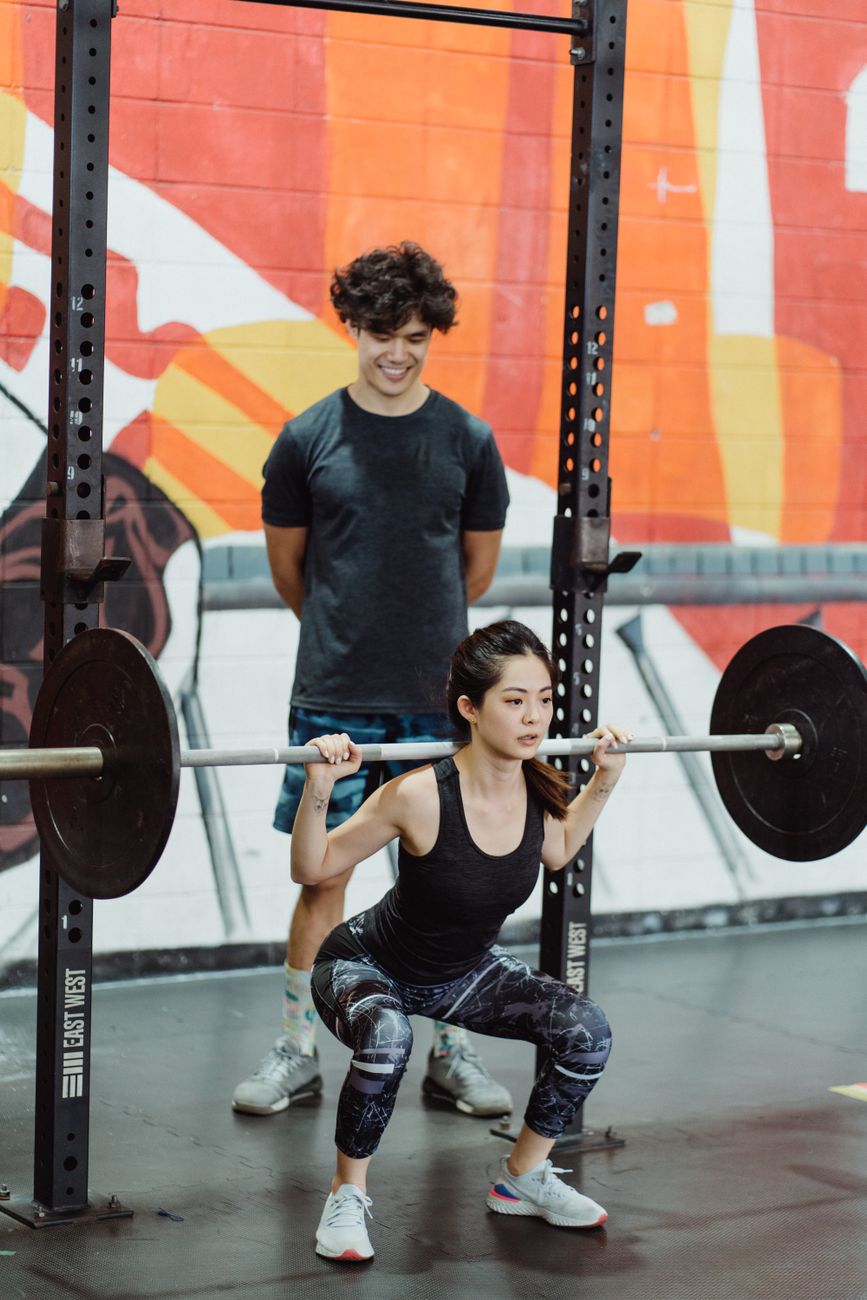
In strength training culture, there is a persistent belief that progress is defined by how heavy you lift.
If you’re not grinding maximal loads, pushing to failure, or testing personal records regularly, many people assume you’re not training hard enough.
But when you look at long-term strength development, joint health, muscle growth, and sustainability, a different picture emerges.
One of the most overlooked and underappreciated strategies in training is this:
Most of your training should happen at submaximal weights.
That doesn’t mean training easy. It doesn’t mean avoiding intensity. It means understanding that you don’t need to live at your absolute limit to make consistent, long-term progress.
In fact, staying slightly below maximal effort for most of your training can improve strength, reduce injury risk, enhance recovery, and help you train consistently for years instead of burning out in months.
Let’s break down why.
What Are Submaximal Weights?
Submaximal training simply means lifting weights that are below your absolute maximum capacity.
This could include:
- Working at 60–85% of your 1-rep max
- Leaving 1–4 reps in reserve (RIR)
- Avoiding failure on most sets
- Using loads that feel challenging but controlled
In practical terms, it means you are not testing your limits on every set.
You are training in a range where performance is high, technique is stable, and fatigue is manageable.
This is where most productive training actually happens.
The Myth: “Heavier Always Means Better”
Many lifters assume that the fastest way to progress is to constantly lift heavier weights.
The logic seems simple:
- If 225 lbs is good, 245 must be better
- If 8 reps is good, 5 reps must be better
- If training hard is good, training harder must be best
But adaptation does not work linearly.
More load does not automatically equal more progress.
At a certain point, pushing heavier and heavier loads too frequently leads to:
- Increased joint stress
- Higher nervous system fatigue
- Slower recovery
- Breakdown in technique
- Increased injury risk
- Diminishing returns
Strength improves from a combination of:
- Mechanical tension
- Volume
- Recovery
- Consistency
Not from constant maximal loading.
Why Submaximal Training Works So Well
Submaximal training creates a unique balance:
- Enough load to stimulate adaptation
- Enough control to maintain technique
- Enough recovery capacity to repeat efforts consistently
This combination is what drives long-term progress.
Let’s look at the key advantages.
1. Better Technique Reinforcement
One of the most overlooked benefits of submaximal training is technical quality.
When loads are extremely heavy, technique often degrades:
- Bar speed slows
- Bracing breaks down
- Range of motion shortens
- Compensations appear
At submaximal loads, you can focus on:
- Clean movement patterns
- Full range of motion
- Consistent positioning
- Better motor control
Strength is not just about muscle. It’s about coordination.
And coordination improves best under loads you can control.
2. More Total Training Volume
Volume is one of the strongest drivers of hypertrophy and long-term strength adaptation.
When you constantly train at maximal or near-maximal loads, volume often suffers because:
- Fatigue builds quickly
- Rest times increase
- Fewer total reps are possible
- Recovery limits training frequency
Submaximal training allows you to accumulate more high-quality volume.
You can:
- Perform more sets
- Perform more total reps
- Train more frequently
- Recover faster between sessions
Over time, this adds up significantly.
3. Faster Recovery Between Sessions
Heavy maximal training is neurologically and structurally demanding.
It places stress on:
- Nervous system
- Connective tissues
- Joints
- Muscles
Submaximal training reduces that cost.
This means:
- Less soreness
- Faster readiness for the next workout
- More consistent weekly training
- Reduced risk of overuse injury
Recovery is often the limiting factor in progress—not effort.
Submaximal training improves the recovery equation.
4. Reduced Injury Risk
Injury risk tends to increase when:
- Loads are extremely high
- Fatigue is elevated
- Technique breaks down
- Recovery is insufficient
Submaximal training helps reduce all four of these variables.
It allows you to:
- Maintain control under load
- Avoid grinding reps
- Stay within safe joint positions
- Reduce repetitive strain
This is especially important for:
- Older lifters
- Lifters with prior injuries
- People training multiple times per week
- Anyone balancing training with a high-stress life
Longevity in training often matters more than peak intensity.
5. Better Long-Term Progression
One of the most important concepts in training is sustainability.
You don’t get stronger from one great workout.
You get stronger from hundreds of good workouts over time.
Submaximal training allows you to:
- Train consistently without burnout
- Progress gradually without spikes in fatigue
- Avoid long layoffs due to injury or exhaustion
Consistency beats intensity in the long run.
6. More Room for Progression
When you train near max effort too often, you can run into a problem:
You leave no room to progress.
If every session is maximal, every session is also near your limit.
Submaximal training creates space for:
- Load increases over time
- Rep progression
- Improved execution
- Planned overload cycles
You are not constantly peaking—you are building.
7. Better Mind-Muscle Connection and Control
When weights are too heavy, attention often shifts to survival.
When weights are submaximal, attention can shift to:
- Muscle engagement
- Tempo control
- Range of motion
- Breathing and bracing
This improves:
- Hypertrophy stimulus
- Movement efficiency
- Awareness of weak points
You can’t refine what you can’t control.
What Submaximal Training Is NOT
This is important.
Submaximal training does NOT mean:
- Avoiding hard work
- Staying in a comfort zone
- Never progressing weights
- Training “light” all the time
It means:
- Training hard with control
- Stopping short of failure most of the time
- Managing fatigue intelligently
- Progressing gradually and consistently
You should still be challenged.
You just don’t need to be crushed.
The Role of Reps in Reserve (RIR)
One of the simplest ways to apply submaximal training is using Reps in Reserve.
Instead of training to failure, you estimate how many reps you could still perform.
Examples:
- 3 RIR = you could do 3 more reps
- 2 RIR = you could do 2 more reps
- 1 RIR = very close to failure
- 0 RIR = failure
Most productive training tends to live around:
- 1–3 RIR for most sets
This provides:
- Strong stimulus
- Manageable fatigue
- High-quality reps
Failure still has a place, but it should be strategic—not constant.
When Heavy Training Still Matters
Submaximal training should be the foundation, but heavy lifting still has value.
Occasional heavier work can help:
- Maintain neural efficiency
- Practice maximal force production
- Build confidence under load
- Expose weak points
The key difference is frequency.
You don’t need to train heavy all the time.
You just need to touch heavier loads occasionally.
A Practical Example
Instead of training like this:
- Squat: 3 sets to failure
- Bench: 3 sets to failure
- Deadlift: max effort every session
A submaximal approach might look like:
- Squat: 4 sets of 5 at 2 RIR
- Bench: 4 sets of 6 at 1–2 RIR
- Deadlift: 3 sets of 5 at 2–3 RIR
You still train hard.
But you finish sessions feeling capable, not destroyed.
That difference compounds over time.
How Submaximal Training Improves Motivation
This is often overlooked.
Training to absolute failure all the time can be mentally draining.
It can create:
- Dread before workouts
- Decreased motivation
- Feeling “beaten up” all the time
- Loss of enjoyment
Submaximal training helps preserve:
- Energy
- Motivation
- Training enjoyment
- Long-term adherence
And adherence is everything.
The Balance Between Stress and Recovery
Training is stress.
Progress happens when stress is followed by recovery.
If stress is too high:
- Recovery lags
- Performance declines
- Injuries become more likely
Submaximal training helps keep stress in a productive range.
It’s not about doing less work.
It’s about doing sustainable work.
Who Benefits Most From Submaximal Training?
Almost everyone benefits, but especially:
- Intermediate and advanced lifters
- People training 3–6 days per week
- Individuals with joint discomfort
- Busy adults with limited recovery capacity
- Lifters focused on long-term strength and muscle
Beginners can also benefit, but often naturally train submaximally without realizing it.
Final Thoughts
Training hard is important.
But training maximally all the time is not necessary—and often not optimal.
Submaximal training offers a smarter approach:
- Better technique
- Higher training volume
- Improved recovery
- Reduced injury risk
- Greater long-term consistency
- Steady, sustainable progress
Strength is not built by constantly pushing to the edge of your capacity.
It is built by repeatedly training close enough to your capacity to stimulate adaptation—without crossing the line into excessive fatigue.
The goal is not to prove how heavy you can lift today.
The goal is to still be lifting, progressing, and feeling good years from now.
And submaximal training is one of the most reliable ways to get there.
Leave a Reply