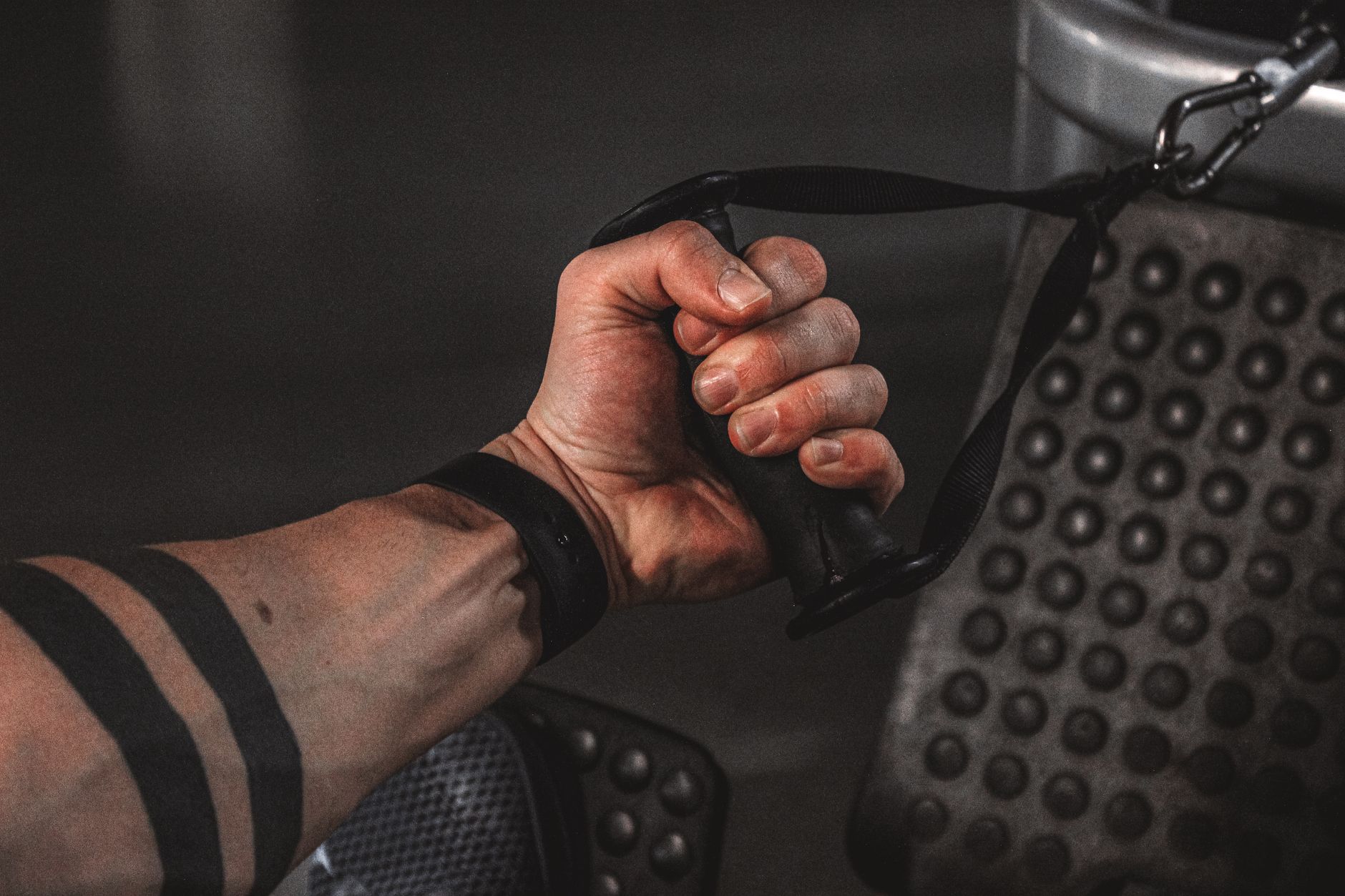
When people think about strength, they often focus on the obvious measurements.
How much can you bench press?
How much can you squat?
How much muscle have you built?
While those numbers can certainly reflect physical fitness, researchers have increasingly identified another measurement that may be just as important—especially as we age.
Grip strength.
At first glance, grip strength seems almost too simple to matter.
After all, it’s just how hard you can squeeze something.
But over the past several decades, grip strength has become one of the most studied measurements in aging research. It has been associated with mobility, independence, physical function, quality of life, and even long-term health outcomes.
That doesn’t mean improving your grip alone will automatically make you healthier or help you live longer.
Rather, grip strength appears to be an excellent indicator of overall muscular strength and physical function. In many ways, it serves as a window into how well the rest of your body is aging.
Fortunately, improving grip strength doesn’t require complicated equipment or specialized training. In fact, many of the best exercises for developing your grip also improve your overall strength, posture, and functional fitness.
Let’s explore why grip strength matters, what the research tells us, and how you can build stronger hands for a healthier future.
What Is Grip Strength?
Grip strength refers to the amount of force your hands and forearms can generate while holding or squeezing an object.
Although researchers often measure it using a hand dynamometer, grip strength shows up in everyday life whenever you:
- Carry groceries
- Open jars
- Lift luggage
- Hold onto handrails
- Garden
- Carry children
- Use tools
- Perform household chores
Everyday independence depends heavily on your ability to hold onto things.
As simple as it sounds, grip strength influences many daily activities that people often take for granted.
Why Researchers Care About Grip Strength
One reason grip strength has received so much attention is because it’s easy to measure.
Unlike expensive imaging tests or complex fitness assessments, measuring grip strength takes only a few seconds.
More importantly, researchers have consistently found that lower grip strength is associated with poorer physical function and a higher likelihood of future health problems in many populations.
Grip strength isn’t causing these outcomes.
Instead, it often reflects the health of the body’s muscular and nervous systems.
Think of it like checking the battery in your smoke detector.
The battery isn’t the whole system, but it can tell you whether something deserves closer attention.
Grip Strength Is a Marker—Not Magic
It’s important to avoid misunderstanding the research.
Some headlines make it sound as though squeezing a hand gripper will dramatically extend your life.
That’s not what the evidence says.
Grip strength is primarily a marker of health.
People with greater overall strength often also have stronger grips because they tend to:
- Stay physically active
- Maintain more muscle mass
- Move more frequently
- Recover better from illness
- Preserve functional capacity as they age
Improving grip strength is valuable, but it should be part of a comprehensive strength-training program rather than the sole focus.
Muscle Loss and Aging
Beginning around middle age, adults gradually lose muscle mass and strength, a process known as sarcopenia.
Without regular resistance training, this decline can accelerate over time.
The consequences include:
- Reduced mobility
- Lower balance
- Increased fall risk
- Difficulty performing daily tasks
- Loss of independence
Grip strength often declines alongside overall muscle strength, making it one of the earliest indicators that physical function may be changing.
The good news is that strength training can significantly slow—and often partially reverse—many of these age-related declines.
Why Grip Strength Matters in Everyday Life
You probably don’t think much about your hands until they become weaker.
Suddenly, simple tasks become frustrating.
Examples include:
- Carrying heavy grocery bags
- Opening tight lids
- Holding a grandchild
- Moving furniture
- Pulling weeds
- Carrying laundry baskets
- Walking with hiking poles
- Using power tools
These aren’t athletic skills.
They’re life skills.
Maintaining grip strength helps preserve independence and confidence in everyday activities.
Grip Strength Reflects Total Body Strength
One reason grip strength correlates with overall health is that it rarely exists in isolation.
People with strong grips often also possess:
- Strong legs
- Strong backs
- Better posture
- Greater muscle mass
- Better balance
That’s because many compound exercises require the entire body to work together.
If your overall strength improves, your grip frequently improves as well.
The Connection Between Grip Strength and Falls
Falls become a significant concern as people age.
While grip strength alone doesn’t prevent falls, stronger individuals generally have:
- Better balance
- Faster reaction times
- Greater confidence during movement
- More reserve strength to recover from a stumble
Lower-body strength remains the primary defense against falls, but grip strength often reflects the broader muscular health that contributes to stability and independence.
Your Hands Connect You to the World
Almost every physical activity begins with your hands.
Think about:
- Carrying a suitcase
- Pulling open a heavy door
- Lifting weights
- Climbing stairs with a handrail
- Holding onto a kayak paddle
- Walking a large dog
- Playing with your children
Strong hands make these tasks easier and safer.
When grip becomes a limiting factor, many other movements become more difficult.
Why Strength Training Naturally Improves Grip
One of the biggest misconceptions is that everyone needs endless grip-specific exercises.
In reality, many traditional strength exercises develop grip exceptionally well.
Examples include:
- Deadlifts
- Romanian deadlifts
- Farmer carries
- Pull-ups
- Chin-ups
- Dumbbell rows
- Kettlebell swings
- Trap bar carries
Every time you hold heavy weight, your hands and forearms receive a training stimulus.
This is one reason compound lifts are so valuable.
They train multiple systems simultaneously.
The Best Grip Exercises
While full-body strength training should remain the priority, certain exercises emphasize grip particularly well.
Farmer Carries
Simply pick up heavy dumbbells, kettlebells, or trap bars and walk.
Benefits include:
- Grip strength
- Core stability
- Posture
- Shoulder endurance
- Conditioning
This may be one of the most functional exercises you can perform.
Dead Hangs
Hanging from a pull-up bar develops:
- Grip endurance
- Shoulder stability
- Forearm strength
Start with short durations and gradually increase your time.
Pull-Ups and Chin-Ups
These exercises require your grip to support your entire body weight.
Even assisted variations provide an excellent stimulus.
Heavy Rows
Rows performed with dumbbells, barbells, or cables challenge grip while strengthening the upper back.
Deadlifts
Heavy deadlifts remain one of the best full-body strength exercises available.
Whenever possible, perform some sets without lifting straps to allow your grip to develop naturally.
Plate Pinches
Holding two smooth weight plates together with your fingers emphasizes pinch strength.
Although less common in everyday life, pinch strength contributes to overall hand function.
Should You Use Lifting Straps?
Lifting straps can be useful.
They allow your back and legs to continue working when grip becomes the limiting factor.
However, relying on straps for every set may reduce opportunities to strengthen your hands.
A balanced approach works well.
For example:
- Perform lighter warm-up sets without straps.
- Use straps only when grip genuinely limits heavier work.
This allows both your larger muscles and your hands to continue improving.
Grip Strength and Sports
Many recreational activities depend heavily on grip strength.
Examples include:
- Rock climbing
- Tennis
- Pickleball
- Golf
- Martial arts
- Baseball
- Rowing
- Obstacle races
Improving grip often improves confidence and endurance during these activities.
Grip Strength Isn’t Just About the Hands
Strong hands begin with strong forearms.
Strong forearms are supported by healthy elbows.
Healthy elbows depend on stable shoulders.
And stable shoulders rely on a strong upper back and core.
Everything is connected.
This is why a balanced strength-training program consistently outperforms isolated exercises alone.
Don’t Neglect Hand Mobility
Strength is only part of healthy hand function.
Mobility matters too.
Consider regularly:
- Opening and closing your hands through a full range of motion.
- Stretching your forearms.
- Rotating your wrists.
- Performing gentle finger mobility drills.
These habits may help maintain comfortable movement, especially for people who spend much of the day typing.
Grip Strength for Office Workers
Modern work environments rarely challenge the hands.
Many people spend eight or more hours each day:
- Typing
- Clicking a mouse
- Using smartphones
While these activities require coordination, they don’t demand much strength.
Adding a few grip-focused exercises to your weekly routine can help offset this lack of physical demand.
How Often Should You Train Grip?
Fortunately, you probably don’t need an entire workout devoted to grip.
For most people:
- Two to three weekly strength-training sessions
- Regular carries
- Pulling exercises
- Occasional dead hangs
provide more than enough stimulation.
Like any muscle group, your hands also need recovery.
More isn’t always better.
A Simple Weekly Grip Routine
If grip is a priority, try adding one or two of the following at the end of each strength workout:
Workout A
- Farmer carries: 3 × 30–60 seconds
- Dead hangs: 2–3 sets
Workout B
- Plate pinches: 3 × 20–30 seconds
- Heavy dumbbell rows
Workout C
- Deadlifts
- Suitcase carries (one weight carried at your side)
This adds only a few minutes to your workouts while providing meaningful benefits.
Grip Strength Is About Function, Not Ego
Like every aspect of fitness, grip training should support your life—not become another competition.
You don’t need crushing handshake strength.
You need hands that allow you to:
- Stay independent.
- Carry your own groceries.
- Lift your grandchildren.
- Enjoy hobbies.
- Travel comfortably.
- Continue training as you age.
Those are meaningful goals.
The Bigger Picture
One of the recurring themes throughout longevity research is that maintaining muscle matters.
Grip strength simply provides an easy way to observe one small part of that picture.
Instead of viewing grip as a separate fitness goal, think of it as another reminder to:
- Strength train consistently.
- Stay physically active.
- Maintain muscle as you age.
- Continue challenging your body throughout life.
Strong hands are usually attached to strong, active people.
Final Thoughts
Grip strength may seem like a small detail, but it reflects something much bigger.
It represents your ability to interact with the world around you.
It influences everyday tasks, recreational activities, and your ability to remain independent as you age.
While grip strength alone isn’t a guarantee of good health, it has become one of the simplest and most useful indicators of overall physical function.
The encouraging news is that you don’t need complicated equipment or endless forearm exercises to improve it.
A well-rounded strength-training program built around compound movements, loaded carries, pulling exercises, and progressive overload will naturally develop stronger hands alongside a stronger body.
As you think about longevity, don’t focus solely on the number on the scale or the size of your muscles.
Ask yourself a more practical question:
Will I still be strong enough to confidently carry my groceries, open a stubborn jar, pick up my grandchildren, and enjoy the activities I love twenty or thirty years from now?
Those are the kinds of abilities that truly define healthy aging.
And maintaining your grip strength is one small—but meaningful—step toward preserving them.
Leave a Reply