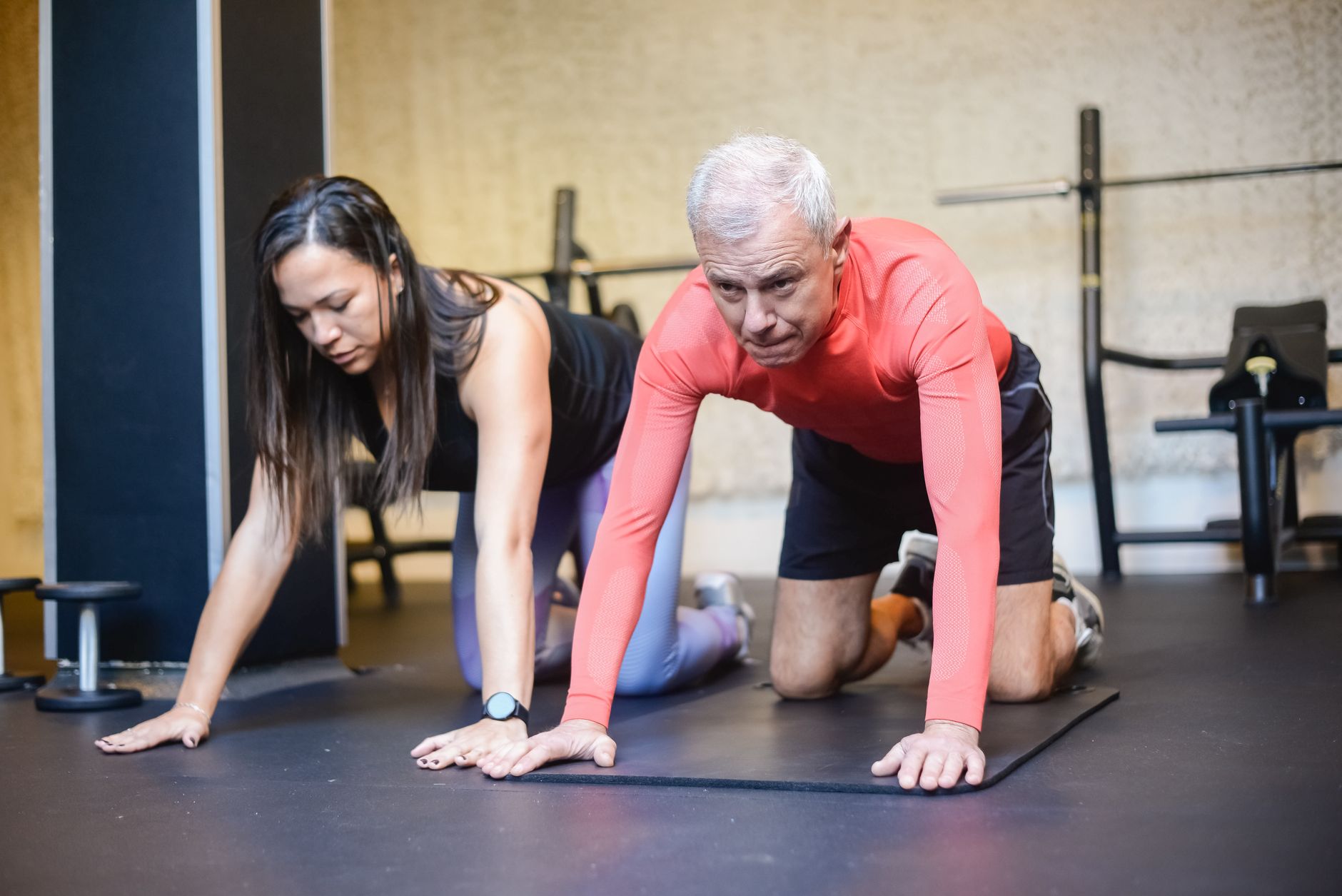
Every decade of life brings new opportunities, new responsibilities, and new physical challenges.
In your 20s, you may have more energy than time or money.
In your 30s, careers and family often compete with your workout schedule.
By your 40s, recovery may take a little longer, and many people begin to notice aches that were easy to ignore a decade earlier.
In your 50s and beyond, preserving strength, mobility, bone density, and independence often become higher priorities than setting personal records.
Yet despite these differences, one truth remains constant:
Strength training is valuable at every age.
What changes isn’t whether you should exercise.
It’s how you prioritize your training, recovery, and overall lifestyle.
Far too many people assume they are “too old” to start strength training or that fitness inevitably declines with age.
While certain aspects of performance naturally change over time, much of what people attribute to aging is actually the result of years of inactivity, poor recovery, inadequate nutrition, and loss of muscle mass.
The human body remains remarkably adaptable throughout life.
You can build strength in your 60s.
You can improve balance in your 70s.
You can increase muscle mass in your 80s.
The sooner you begin, the better.
But it’s never too late to improve.
Let’s explore how your training priorities can evolve through each stage of adulthood and how to build a fitness routine that supports long-term health, performance, and independence.
The Principles Don’t Change
Before discussing specific decades, it’s important to recognize that the fundamentals of fitness remain remarkably consistent throughout life.
Regardless of age, most adults benefit from:
- Progressive strength training
- Regular cardiovascular exercise
- Daily movement
- Adequate protein
- Quality sleep
- Stress management
- Recovery
- Mobility work
What changes is the balance between these components—not their importance.
Your 20s: Build the Foundation
For many people, their 20s represent the greatest opportunity to build lifelong habits.
Recovery is often faster than it will be later in life.
Muscle growth tends to occur more readily.
Learning new movement patterns is generally easier.
This is an excellent decade to focus on mastering:
- Squats
- Hip hinges
- Presses
- Rows
- Pull-ups
- Carries
Developing excellent technique now pays dividends for decades.
Rather than constantly chasing novelty, prioritize learning how to move well.
Avoid the “More Is Better” Trap
Many people in their 20s assume they can recover from anything.
While younger adults often tolerate higher training volumes, that doesn’t mean unlimited exercise is productive.
Excessive training, poor sleep, and inadequate nutrition can still lead to:
- Burnout
- Overuse injuries
- Poor recovery
- Plateaus
Learning how to recover is just as valuable as learning how to train.
Nutrition Matters
Your 20s are also an excellent time to develop healthy eating habits.
Rather than jumping from one restrictive diet to another, focus on:
- Protein at every meal
- Fruits and vegetables
- Whole grains
- Healthy fats
- Adequate hydration
These habits become easier to maintain when established early.
Your 30s: Balance Fitness With Real Life
For many adults, the 30s bring significant life changes.
Careers become more demanding.
Children enter the picture.
Free time becomes limited.
Sleep may become less predictable.
This is where many people abandon exercise altogether because they can no longer train exactly as they did in college.
Instead of chasing perfect workouts, embrace consistency.
Three high-quality workouts every week often outperform six inconsistent ones.
Efficiency Becomes More Important
During this stage of life, shorter, focused workouts are often the most sustainable.
Prioritize compound movements that provide the greatest return on your time.
Examples include:
- Squats
- Deadlifts
- Rows
- Presses
- Split squats
- Farmer carries
These exercises train multiple muscle groups simultaneously while supporting daily function.
Walking Is Your Secret Weapon
Daily walking becomes increasingly valuable during busy years.
Walking:
- Supports heart health
- Reduces stress
- Improves recovery
- Helps regulate blood sugar
- Increases daily activity
Unlike demanding workouts, walking fits easily into most schedules.
Your 40s: Train Smarter, Not Harder
Many people notice subtle changes during their 40s.
Recovery may require more attention.
Joint stiffness may increase.
Sleep becomes even more important.
This doesn’t mean you should stop lifting heavy.
It means you should become more intentional.
Focus on:
- Excellent technique
- Progressive overload
- Adequate recovery
- Joint-friendly exercise selection
The goal shifts from proving what you can survive to maximizing what you can consistently recover from.
Muscle Matters More Than Ever
Beginning in middle adulthood, preserving muscle becomes increasingly important.
Muscle supports:
- Metabolic health
- Bone density
- Balance
- Daily function
- Healthy aging
Strength training becomes one of the most effective tools available for maintaining these qualities.
Recovery Is No Longer Optional
Many adults in their 40s discover that they can’t ignore recovery without consequences.
Prioritize:
- Seven to nine hours of sleep
- Protein-rich meals
- Hydration
- Recovery days
- Mobility work
These habits often improve performance more than simply adding another workout.
Your 50s and Beyond: Train for Independence
One of the biggest misconceptions about aging is that exercise becomes less important.
In reality, the opposite is true.
Strength training becomes increasingly valuable because it helps preserve qualities that naturally decline with age if left untrained.
These include:
- Muscle mass
- Bone density
- Balance
- Power
- Mobility
- Functional strength
Maintaining these abilities directly supports independence.
Strength Supports Everyday Life
The goal isn’t simply lifting heavier weights.
It’s preserving your ability to:
- Carry groceries
- Climb stairs
- Rise from the floor
- Play with grandchildren
- Travel
- Garden
- Maintain an active lifestyle
Fitness becomes less about appearance and more about capability.
Power Deserves Attention
While maximal strength remains important, power also deserves consideration.
Power refers to how quickly you can produce force.
This ability becomes increasingly valuable for preventing falls.
Simple movements such as:
- Standing up quickly from a chair
- Climbing stairs
- Stepping over obstacles
all require power.
Appropriately programmed resistance training can help preserve this quality.
Balance and Mobility
Strength provides the foundation for balance.
Mobility allows that strength to be used effectively.
Including exercises such as:
- Step-ups
- Split squats
- Farmer carries
- Single-leg work
can improve both stability and confidence.
Recovery Changes With Age
Recovery isn’t simply about getting older.
It’s about accumulated stress.
As responsibilities increase, your recovery capacity may decrease due to:
- Work
- Family
- Sleep disruption
- Medical conditions
- Higher overall stress
Rather than comparing yourself to your 25-year-old self, compare yourself to where you were six months ago.
Progress remains possible at every age.
Nutrition Evolves Too
Although nutritional fundamentals remain similar, older adults often benefit from paying closer attention to:
- Protein intake
- Calcium
- Vitamin D
- Fiber
- Hydration
Maintaining muscle becomes increasingly dependent on both strength training and adequate nutrition.
Cardio Throughout Life
Heart health matters at every age.
Rather than viewing cardio as punishment, think of it as supporting the engine that powers everything else.
For most adults, an excellent combination includes:
- Daily walking
- Zone 2 cardio
- Occasional higher-intensity efforts if appropriate
- Recreational activities
This approach supports cardiovascular health without compromising recovery.
Mobility Never Stops Mattering
Mobility isn’t only for older adults.
Maintaining healthy movement throughout life makes training more enjoyable and reduces unnecessary stiffness.
Simple daily mobility work can help preserve:
- Shoulder function
- Hip mobility
- Ankle mobility
- Thoracic spine movement
These qualities support both performance and comfort.
Common Mistakes at Every Age
Despite the differences between decades, many mistakes remain remarkably consistent.
People often:
- Chase trends instead of fundamentals.
- Neglect recovery.
- Ignore sleep.
- Compare themselves to others.
- Skip strength training.
- Do too much cardio.
- Sit too much between workouts.
- Eat too little protein.
Avoiding these mistakes provides benefits regardless of age.
It’s Never Too Late to Start
Perhaps the most encouraging aspect of exercise science is the body’s remarkable capacity to adapt.
Studies consistently demonstrate that older adults can improve:
- Strength
- Balance
- Walking speed
- Muscle mass
- Bone health
- Quality of life
The idea that “it’s too late” simply isn’t supported by the evidence for most healthy adults.
Progress may occur more gradually.
But progress is still possible.
A Sample Weekly Program for Every Decade
Although the emphasis changes slightly with age, the overall structure remains surprisingly similar.
Three days per week
Full-body strength training focusing on compound movements.
Two to four days per week
Zone 2 cardio such as brisk walking, cycling, or swimming.
Daily
Walking and general physical activity.
Throughout the week
Mobility work, adequate sleep, hydration, and balanced nutrition.
The details may vary.
The foundation stays remarkably consistent.
The Bigger Picture
Fitness isn’t something you accomplish in one decade.
It’s a lifelong practice.
Your goals may evolve.
Your schedule may change.
Your recovery may look different.
But movement remains one of the greatest investments you can make in your future health.
Every workout becomes a deposit into the body you’ll rely on years from now.
Final Thoughts
Every stage of life presents unique opportunities and challenges, but one principle remains true from your 20s into your 70s and beyond:
A stronger body is a more capable body.
In your 20s, strength training helps you build the foundation for decades of healthy movement.
In your 30s, it allows you to keep up with the demands of work and family while protecting your long-term health.
In your 40s, it becomes a powerful tool for maintaining muscle, supporting joint health, and continuing to perform at a high level without unnecessary wear and tear.
In your 50s and beyond, it plays an essential role in preserving balance, bone density, mobility, confidence, and independence.
The exercises themselves may not change dramatically.
Squats, hinges, presses, rows, carries, and walking remain valuable throughout life.
What changes is your perspective.
Instead of training to impress others, you begin training to support the life you want to live.
You train so you can lift your grandchildren, travel comfortably, hike with friends, carry groceries with ease, and continue doing the activities you enjoy without unnecessary limitations.
There is no perfect age to begin taking your health seriously.
The best time is now.
Whether you’re 25, 45, or 75, your body is capable of adapting to thoughtful, consistent training.
Your future self will benefit from every workout you complete today.
Because fitness isn’t about preparing for one season of life.
It’s about building the strength, resilience, and health to enjoy every season that lies ahead.

Leave a Reply